
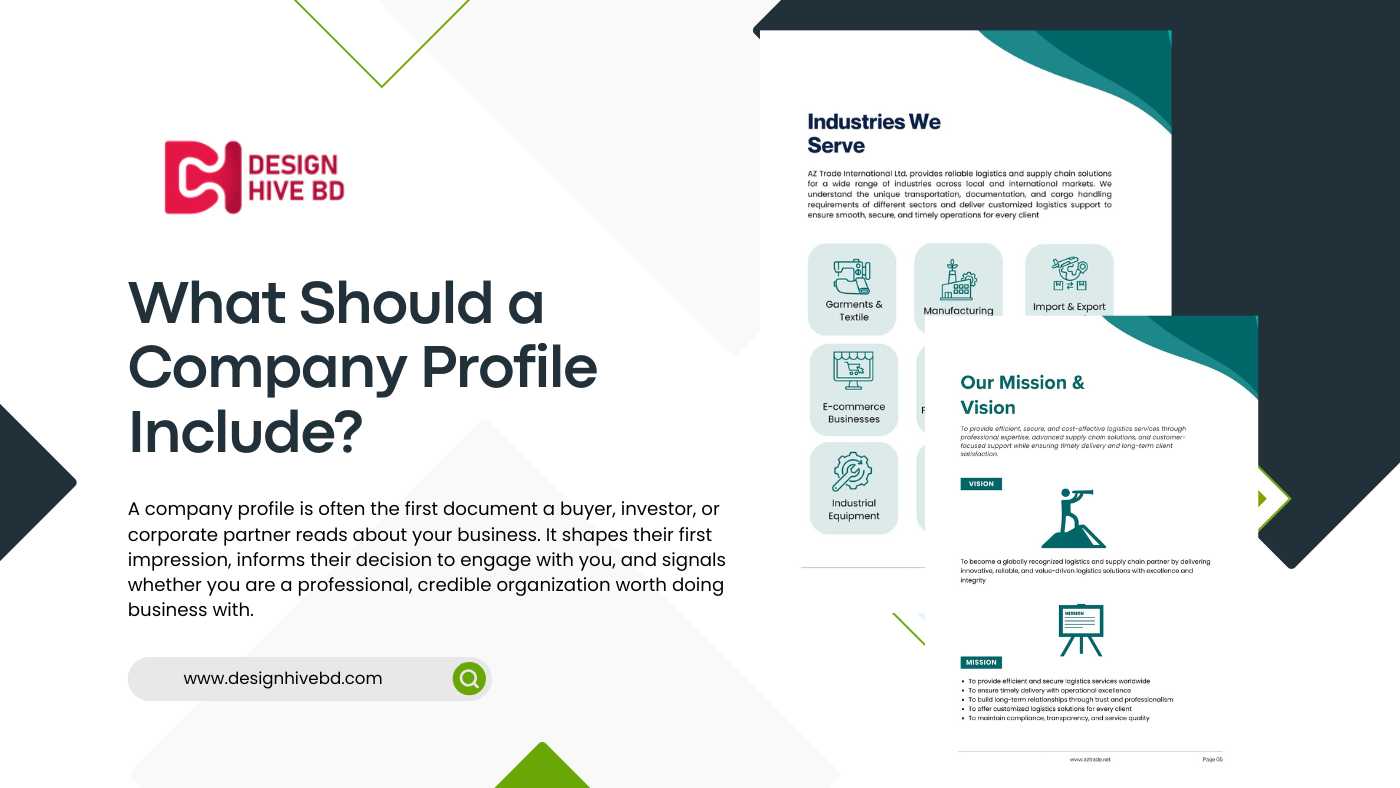
What Should a Company Profile Include? A Complete Guide for Businesses in Bangladesh
If you have ever sat down to create a company profile and stared at a blank page not knowing where to start, you are not alone. It is one of the most common challenges business owners face in Bangladesh — and one that Design Hive has helped hundreds of companies solve.
A company profile is often the first document a buyer, investor, or corporate partner reads about your business. It shapes their first impression, informs their decision to engage with you, and signals whether you are a professional, credible organization worth doing business with.
The problem is that many businesses in Bangladesh either include too little — resulting in a thin document that fails to impress — or too much — creating a cluttered profile that no one reads carefully. Getting the content balance right is both an art and a strategic discipline.
This guide covers every section that should be in a professional company profile, with specific guidance on why each section matters and what to include — tailored to the Bangladesh business context.
What Is a Company Profile and Why Does It Matter?
A company profile is a professional corporate document that presents your business identity, history, services, capabilities, achievements, and contact information in a structured, visually designed format.
Unlike a website — which visitors skim and navigate non-linearly — a company profile is a curated, linear presentation of your business. It is typically distributed in print at meetings, trade fairs, and buyer visits, and shared digitally via email and WhatsApp.
In Bangladesh’s highly competitive business landscape, particularly in export-oriented industries like garments, engineering, and logistics, a professional company profile is not optional — it is a fundamental business requirement. International buyers, corporate clients, and institutional donors routinely request a company profile before agreeing to a meeting, a partnership, or a contract.
The 14 Essential Sections of a Professional Company Profile
1. Cover Page
The cover page is the first thing anyone sees. It should include your company name, logo, tagline (if you have one), and a strong visual that represents your brand identity. The design must immediately communicate professionalism and quality — because readers make a judgment about your company within the first three seconds of seeing the cover.
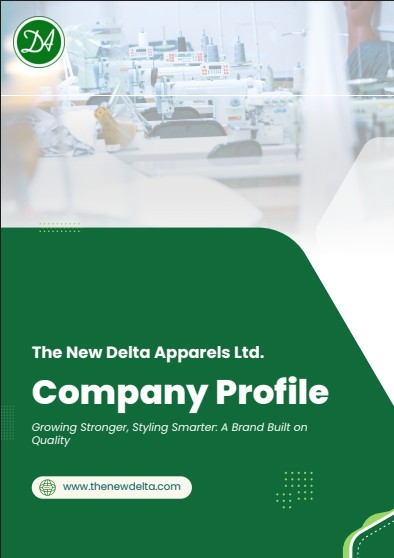
What to include: Company name, logo, tagline or brand statement, high-quality background visual or brand imagery, and the year of the document.
Common mistake: Using a low-resolution logo, a cluttered cover, or no visual identity at all. The cover sets the tone for everything that follows.
2. Company Overview / Introduction
This is your opening statement — a concise, compelling introduction to who you are, what you do, where you are based, and who you serve. Think of it as your elevator pitch in written form.
What to include: Company name, year established, business nature (manufacturer, service provider, trading house, etc.), primary industry, geographic coverage, and a one-paragraph summary of your value proposition.
Bangladesh context: For garments factories, this section should mention export markets. For buying houses, it should reference key source markets. For NGOs, it should introduce the development focus and beneficiary groups.
Length: One to two paragraphs — clear and direct.
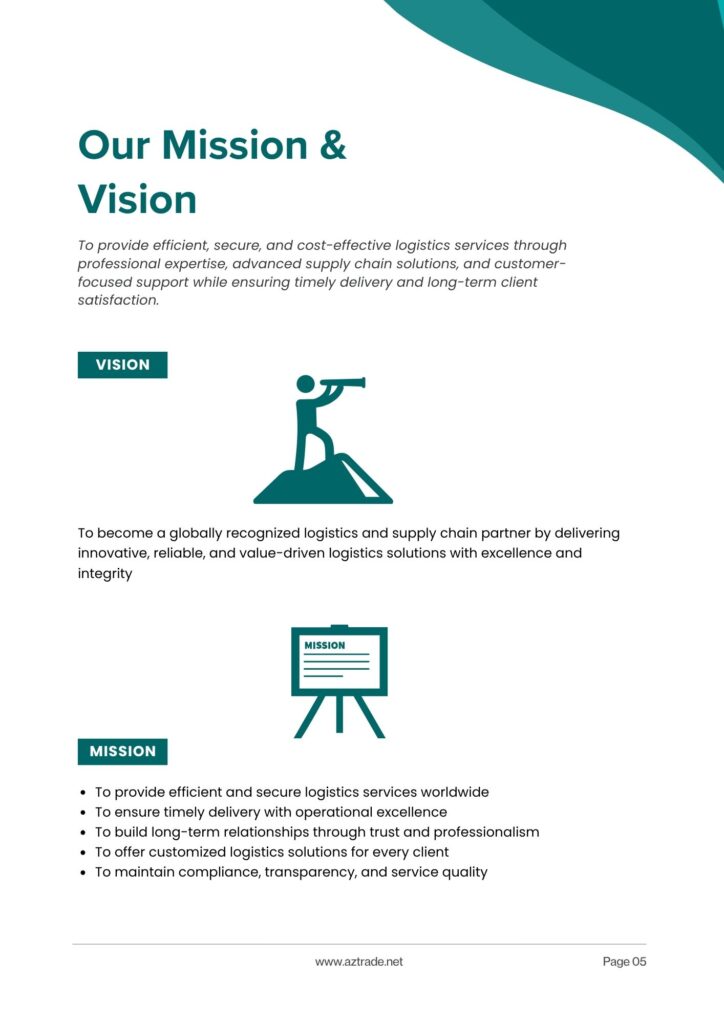
3. Mission, Vision, and Core Values
This section defines why your organisation exists (mission), where it is going (vision), and the principles that guide how it operates (values). These are not empty corporate statements — when written well, they signal to buyers and partners that your organisation is professionally managed and has long-term strategic intent.
What to include:
- Mission: A one-sentence statement of your company’s purpose and the problem it solves
- Vision: A forward-looking statement of where your company intends to be in the next five to ten years
- Core Values: Three to six values that reflect how your team operates — with brief explanations
4. Chairman’s Message or Managing Director’s Message
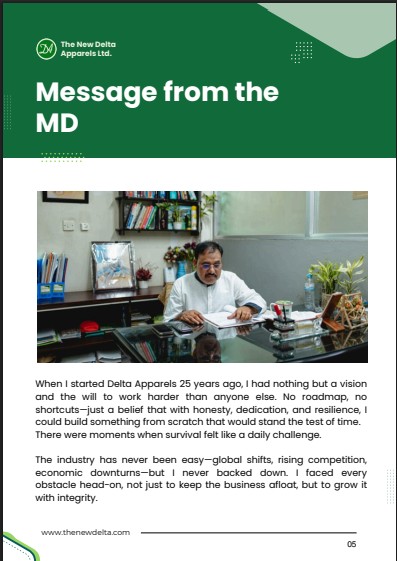
A personal message from senior leadership humanises your company and builds trust. It tells readers that real, accountable people stand behind the organisation. In the Bangladesh business culture, where relationship-driven commerce is the norm, this section carries significant weight.
What to include: A brief message (150–250 words) from the Chairman, Managing Director, or CEO — covering the company’s founding philosophy, current priorities, and a forward-looking commitment to clients and partners.
Key principle: This message must sound authentic, not generic. Avoid copy-pasting boilerplate corporate language. Readers can tell the difference.
5. Company History and Milestones
Showing how your business has grown over time builds credibility and demonstrates stability. It tells the reader that you have a track record — that you have been tested by the market and have continued to grow.
What to include:
- Year of establishment and founding story
- Key growth milestones (factory expansion, new markets entered, certifications achieved)
- Major client acquisitions or industry recognitions
- Timeline infographic (highly effective visually)
6. Core Services or Product Portfolio
This is typically the longest and most detailed section — and rightly so. Buyers and clients need to understand clearly and specifically what you offer.
What to include:
- Clear description of each service or product category
- Key specifications, capabilities, or capacity information where relevant
- Differentiators — what makes your offering better or different from alternatives
- Any relevant technical certifications for specific services or products
Bangladesh context: For garments factories, this section covers product types (knitwear, woven, denim, etc.), production capacity per day, machinery details, and buyer-specific capabilities. For engineering companies, it covers project types, equipment, and technical specialisations. For NGOs, it covers programme areas and intervention models.
7. Factory or Operational Information
For manufacturing businesses in Bangladesh — particularly garments, textile, and industrial companies — this section is critical. International buyers and compliance auditors want to see your physical operational capability before committing to any engagement.
What to include:
- Factory location and total floor area
- Number of production lines and workers
- Production capacity (units per day/month)
- Machinery and equipment list
- Safety and compliance infrastructure
- LEED certification or green factory status (if applicable)
8. Certifications and Compliance
Certifications are proof. They tell buyers and partners that your company meets internationally recognised standards for quality, safety, labour practices, and environmental responsibility. This section is particularly important for export-oriented businesses in Bangladesh.
What to include:
- ISO certifications (ISO 9001, ISO 14001, etc.)
- Social compliance certifications (BSCI, SEDEX, WRAP, SA8000)
- Environmental certifications (LEED, GOTS, OEKO-TEX)
- Buyer-specific certifications or approved vendor status
- Scan or visual representations of certificate logos
9. Management Team
People do business with people. Introducing your leadership team — with names, titles, and brief professional backgrounds — adds accountability, credibility, and a human dimension to your company profile.
What to include:
- Photos (professional headshots), names, and titles of key management team members
- Two to three sentence professional background for each person
- LinkedIn profiles or academic credentials where relevant
10. Major Clients and Partners
If you work with well-known brands, corporate clients, or institutional partners, showcasing them in your profile dramatically increases your credibility. In Bangladesh’s garments sector, being a vendor to H&M, Zara, or Walmart carries enormous weight with prospective buyers.
What to include:
- Client and partner logos (with permission)
- Industry or country of origin for international clients
- Brief note on the nature of the relationship (where possible)
11. Projects and Achievements
This section provides evidence of your company’s track record. For engineering companies, it shows completed project portfolios. For NGOs, it demonstrates development impact. For logistics companies, it highlights major contract deliveries.
What to include:
- Notable projects with brief descriptions
- Scale indicators (project value, beneficiary numbers, geographic coverage)
- Photographs where relevant and available
- Awards, industry recognition, or media coverage
12. Social Responsibility (CSR) Section
Corporate Social Responsibility has become increasingly important for businesses dealing with international buyers, institutional donors, and government bodies. A CSR section demonstrates that your organisation is conscious of its wider impact on society and the environment.
What to include:
- Worker welfare programmes (health, education, skills training)
- Environmental sustainability initiatives
- Community development contributions
- Gender and inclusion policies
13. Contact Information
Every company profile must end with clear, complete contact information. Readers who have been impressed by your profile need an easy path to reach you. A beautiful profile that leaves a buyer unable to find your phone number has failed its most basic purpose.
What to include:
- Registered company name and address
- Head office and factory addresses (if different)
- Phone and WhatsApp number
- Email address
- Website URL
- Facebook page and LinkedIn profile
- Google Maps location (or QR code linking to it)
14. Back Cover
The back cover is a final branding opportunity. Use it to reinforce your brand identity with your logo, tagline, key contact details, and a strong visual. Many companies treat the back cover as an afterthought — the best company profiles treat it as a second cover page.
How Many Pages Should a Company Profile Be?
The right length depends on the size and nature of your business:
- Small businesses and startups: 8–12 pages
- Mid-size companies: 12–16 pages
- Large corporations, factories, and conglomerates: 16–24 pages
More pages are not automatically better. A tight, well-written 12-page profile is far more effective than a padded 24-page document full of filler content.
What Format Should a Company Profile Be Delivered In?
For businesses in Bangladesh, we recommend providing your company profile in two formats:
Print-ready PDF (300 DPI): For physical printing at professional print shops. This format includes bleed marks and is optimised for high-quality offset or digital printing.
Digital PDF (optimised): A compressed version for sharing via email and WhatsApp, and for embedding on your website. This version loads quickly and looks sharp on all screens.
Common Mistakes to Avoid in a Company Profile
1. Using stock photography instead of real images International buyers in particular look for authenticity. Real photographs of your factory, your team, and your products are far more convincing than stock images.
2. Writing in overly formal or generic language Your company profile should sound like your brand — not like a government tender document. Clear, professional, and confident language works best.
3. Outdated information A company profile with outdated certifications, wrong contact details, or obsolete product information actively damages your credibility. Review and update your profile at least every 18 months.
4. Ignoring design quality Content and design are equally important. Excellent content in a poor design will underperform. The visual quality of your profile signals the quality of your business.
5. No clear call to action Every section of your profile should guide the reader toward a next step — getting in touch, visiting your factory, or arranging a meeting. Make it easy for interested readers to act.
Final Thoughts: Invest in Your Company Profile
A professionally designed company profile is one of the highest-return investments a business in Bangladesh can make. It works for you at every buyer meeting, trade fair, procurement review, and investor presentation — without you having to say a word.
At Design Hive, we create complete company profiles for businesses across Bangladesh — from the opening overview to the final back cover — including professional content writing, custom design, and both print-ready and digital file delivery.
Ready to create a company profile that opens doors for your business? Contact Design Hive today for a free consultation.
Design Hive is a company profile design agency in Bangladesh, specialising in professional corporate documents for garments factories, buying houses, engineering companies, NGOs, and businesses of all sizes.

Leave a Reply